Examples of successful previous winners of Hack for Earth hackathons.
01 / 04
Polisense AI
PeruGeospatial AIClimate planningEnergy access
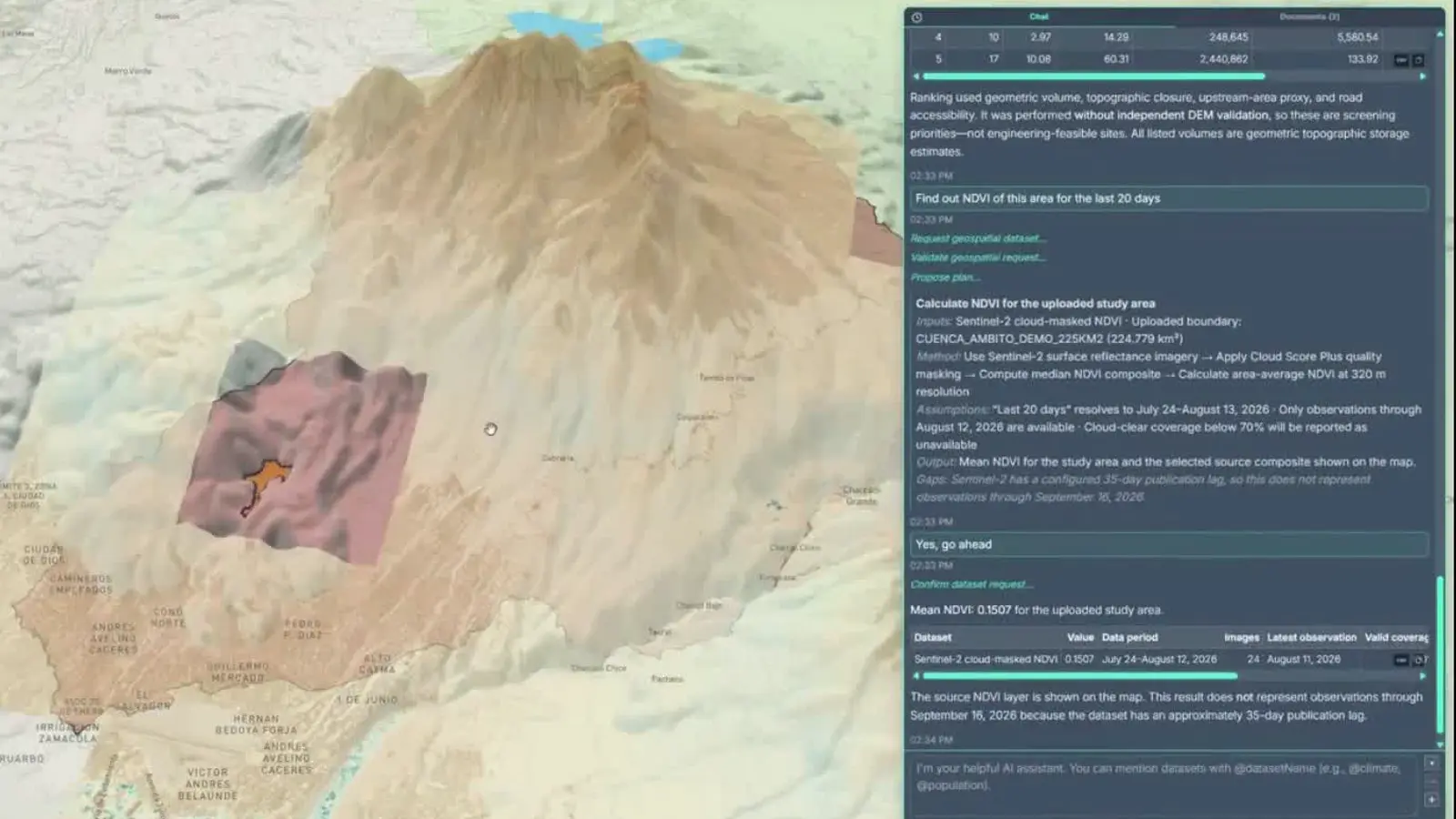
A territorial climate engine that takes analysts from question to decision.
Climate analysts spend hours stitching satellite imagery, weather, infrastructure and regulatory data together before they can decide anything. Polisense lets them ask in plain language — where should we invest, protect or intervene first? — then runs the geospatial workflow and returns ranked, explainable candidates with a committee-ready report.
Since the hackathon
Completed Hack for Earth's six-month Build for Earth accelerator, has pilots running in Peru, Jordan and Moldova, and has come back to mentor new hackathon teams.
AI for City Climate Action Hackathon, Climate Week NYC 2025
Seed funding from the hackathon award
$15K
Time for a single geospatial analysis
4h → 30m
Countries with pilots and live deployments
3
02 / 04
Komodo Solutions
IndonesiaEarth observationBlue carbonLow-connectivity AI
Applied AI and spatial intelligence for a sustainable planet.
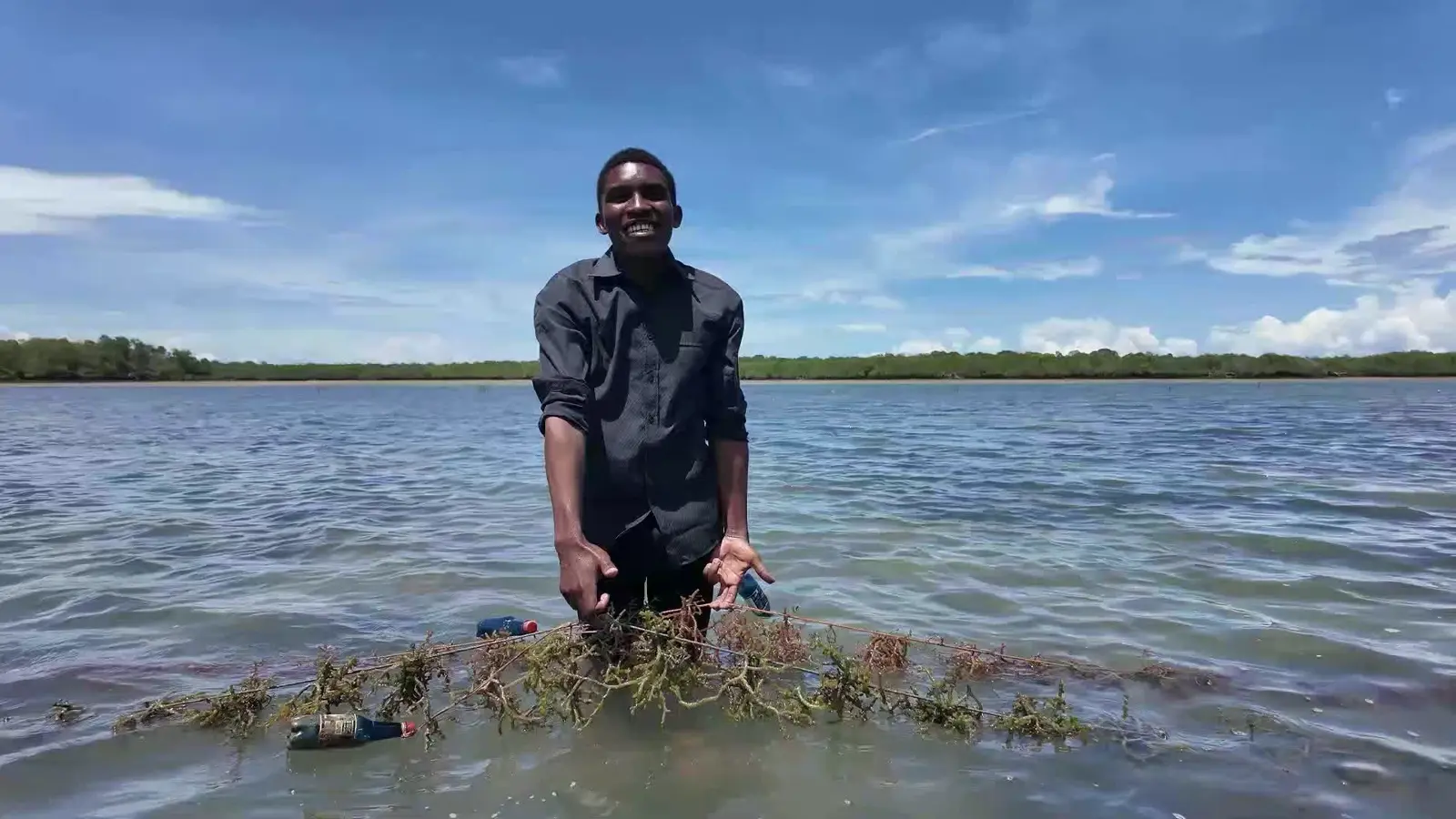
What started as a winning hackathon idea is now an Indonesian technology company. SciFy turns earth observation into actionable intelligence for conservation, and LoFAi is low-footprint AI that captures community knowledge in remote coastal areas with limited connectivity.
Since the hackathon
Incorporated as Komodo Solutions and now maps and models seagrass ecosystems to provide field evidence for Indonesia's first blue carbon project.
Turning fast-growing seaweed into biodegradable bio-leather.
Leather and its petroleum-based alternatives cost huge amounts of water, chemicals and microplastics. KelTex extracts natural polymers from farmed seaweed — which needs no land, fertiliser or freshwater — and casts them into a durable leather-like material, with AI-powered sensors optimising growing conditions on the farms.
Since the hackathon
Named one of the winners of the H&M Foundation Global Change Award 2026, and is building a production facility ahead of commercialisation.
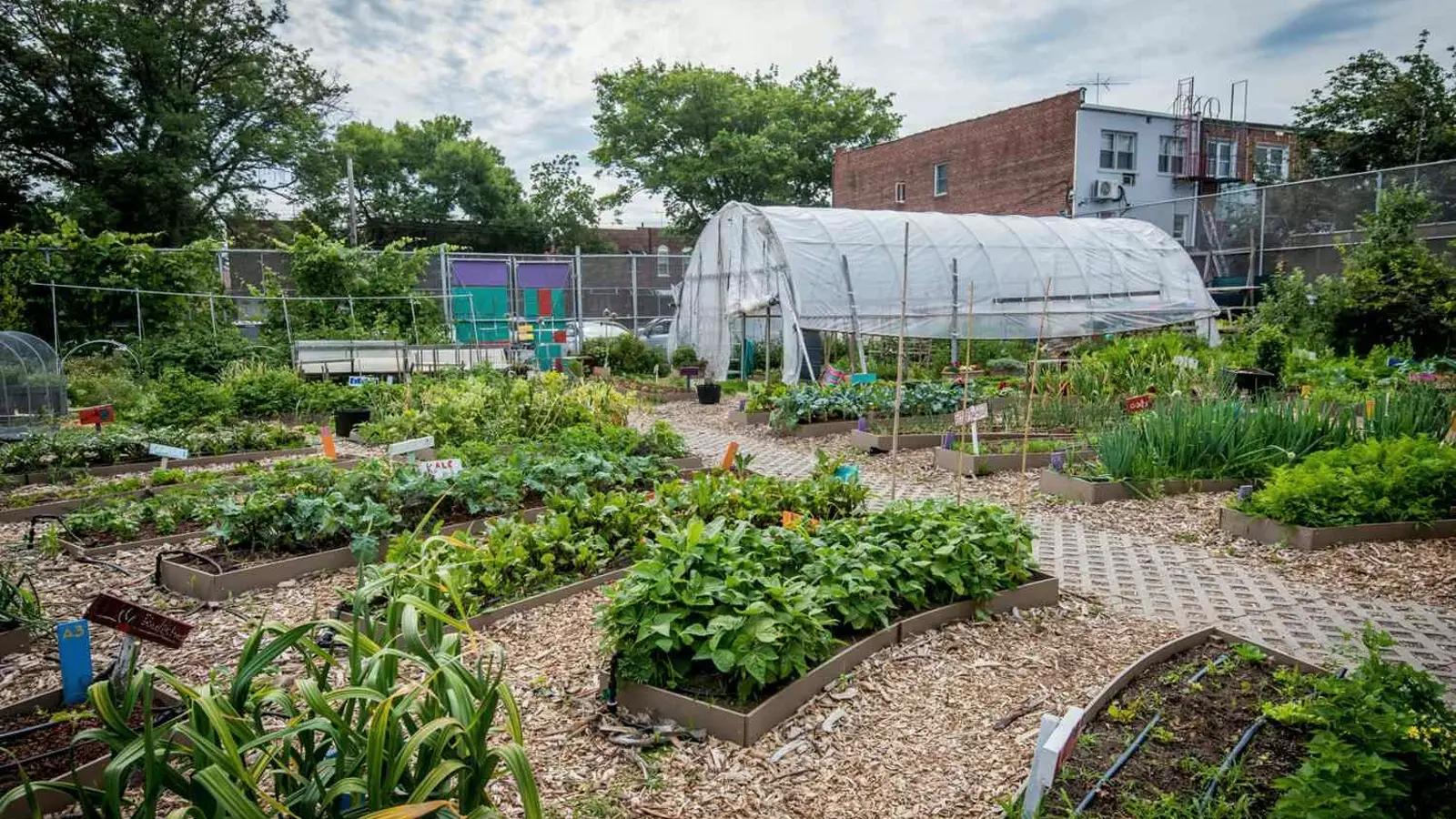
Farming-as-a-Service: distributed food infrastructure for a climate-disrupted world.
Drought has cut crop yields by 30–50% in parts of Southern Africa, yet only 4% of climate adaptation finance reaches agriculture. Verdant installs low-cost, substrate-based hydroponic units built from local materials that keep crops alive through power cuts, and communities subscribe to nutrients and technical support.
Since the hackathon
Raising a $100,000 pilot to build three community food resilience hubs and 100 household units, with local ambassadors trained to run them.